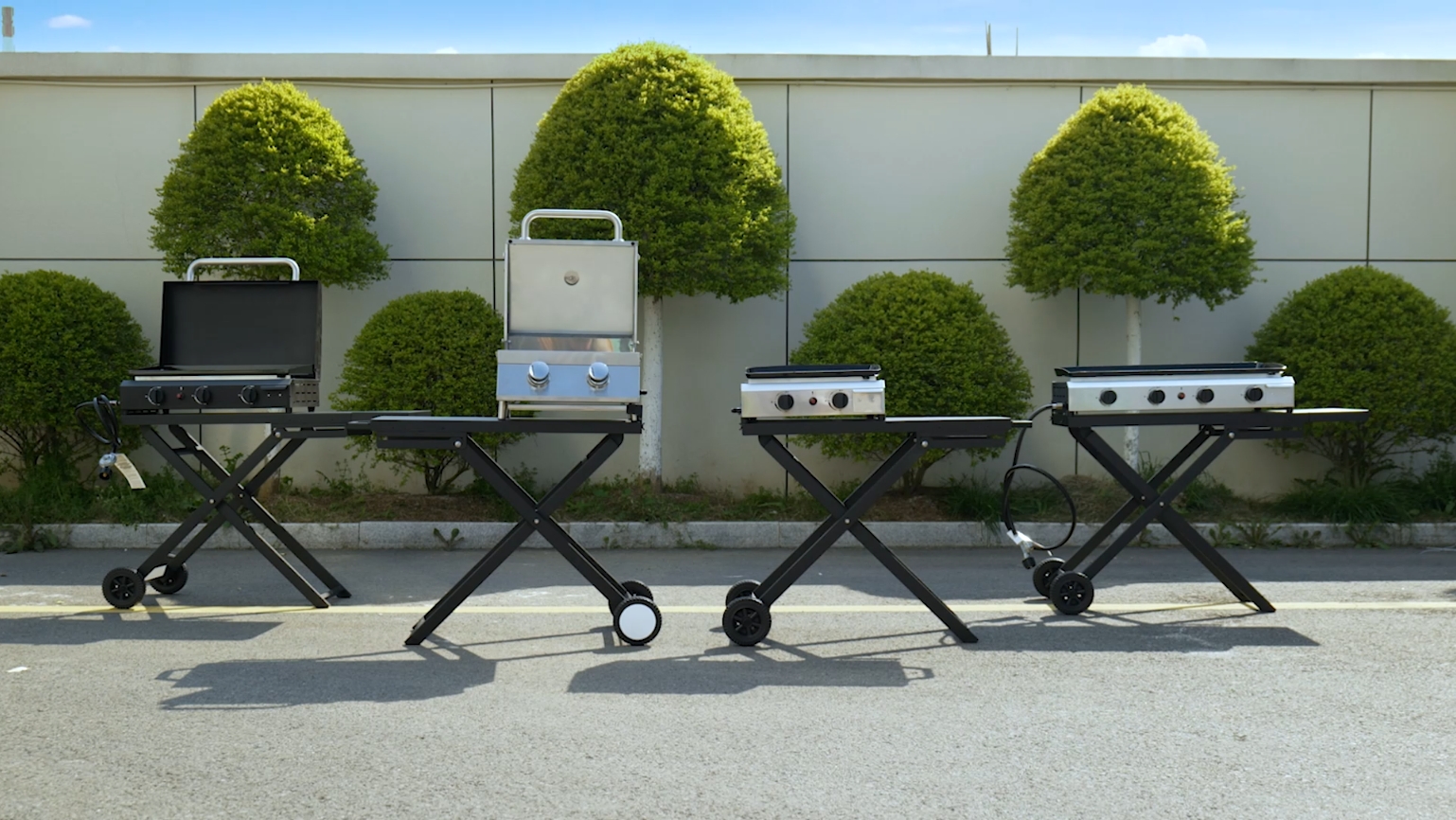
BBQ grill materials significantly affect the environment through production, usage, and disposal, with options like stainless steel and cast iron offering varying levels of sustainability.
Evaluating Common BBQ Grill Materials
Definition: Common BBQ grill materials include stainless steel, cast iron, porcelain-enameled steel, aluminum, and cast aluminum, each with unique durability, heat retention, and environmental profiles .
Stainless steel, particularly grade 304, resists corrosion and lasts longer, reducing replacement needs and resource use . Cast iron provides excellent heat retention but requires maintenance to prevent rust, while porcelain-enameled options protect against elements but can chip .
Brands like Lumbre use high-quality stainless steel in their natural gas grills for durability and lower long-term impact .
The image above shows common BBQ grill materials, highlighting stainless steel's smooth finish versus cast iron's textured surface for better visualization of their differences.
Carbon Footprint of Different Grill Types
Definition: The carbon footprint of grill types measures CO2 emissions from fuel production and burning, with gas grills at 5.6 lbs CO2 per hour, charcoal at 11 lbs, and electric higher depending on power source .
Pellet grills often have the lowest footprint due to clean-burning wood pellets, emitting fewer pollutants than propane or charcoal . Charcoal briquettes can produce up to 21 lbs CO2 per hour from 90 briquettes, plus particulates .
Opt for efficient models like Lumbre's natural gas grills, which minimize emissions through sustainable design.
Carbon Footprint Comparison per Hour of Use (lbs CO2)| Grill Type | CO2 Emissions | Source |
|---|
| Gas/Propane | 5.6 | U.S. Dept. of Energy |
| Charcoal | 11 | Off-site emissions |
| Electric | 15 | Grid-dependent |
| Pellet | Lowest overall | Clean burn |
This chart illustrates emission differences, emphasizing why switching to lower-footprint grills reduces annual impacts.
Recyclability of BBQ Grill Components
Definition: Recyclability refers to the ability to process grill parts like steel grates, aluminum lids, and burners into new materials, with most metals over 90% recyclable if disassembled .
Grills contain steel, aluminum, and stainless steel, all highly recyclable at scrap centers after grease removal and disassembly . Plastics and porcelain coatings complicate full recycling but metals dominate weight.
Check local facilities; Weber grills' components like Flavorizer bars are recyclable, similar for Lumbre models.
Impact of Non-Toxic Materials on the Environment
Definition: Non-toxic materials like stainless steel and cast iron avoid chemical leaching at high heat, unlike painted metals, reducing air and food pollution .
Stainless steel prevents toxin release, promoting cleaner air and safer cooking; cast iron is naturally non-toxic with proper seasoning . Electric grills using these eliminate combustion byproducts .
Lumbre prioritizes such materials for health and eco benefits in their outdoor grills .
The depicted non-toxic grill grates demonstrate rust-resistant stainless steel ideal for sustainable, safe barbecues.
Future Trends in Eco-Conscious Grill Manufacturing
Definition: Future trends include recycled metals, pellet/electric hybrids, and smart tech for efficiency, driven by consumer demand for 50% emission reductions .
Manufacturers adopt recycled stainless steel, bamboo fuels, and infrared tech; pellet grills lead with low footprints . Solar accessories emerge by 2026 .
Explore Lumbre's innovations at their product page for cutting-edge sustainability.
For expert advice, visit our best natural gas grills guide or outdoor griddles.
Conclusion
Choosing sustainable BBQ grill materials like those in Lumbre grills lowers your environmental impact—opt for recyclable, low-emission options today for a greener tomorrow. Ready to upgrade? Shop Lumbre grills.
 English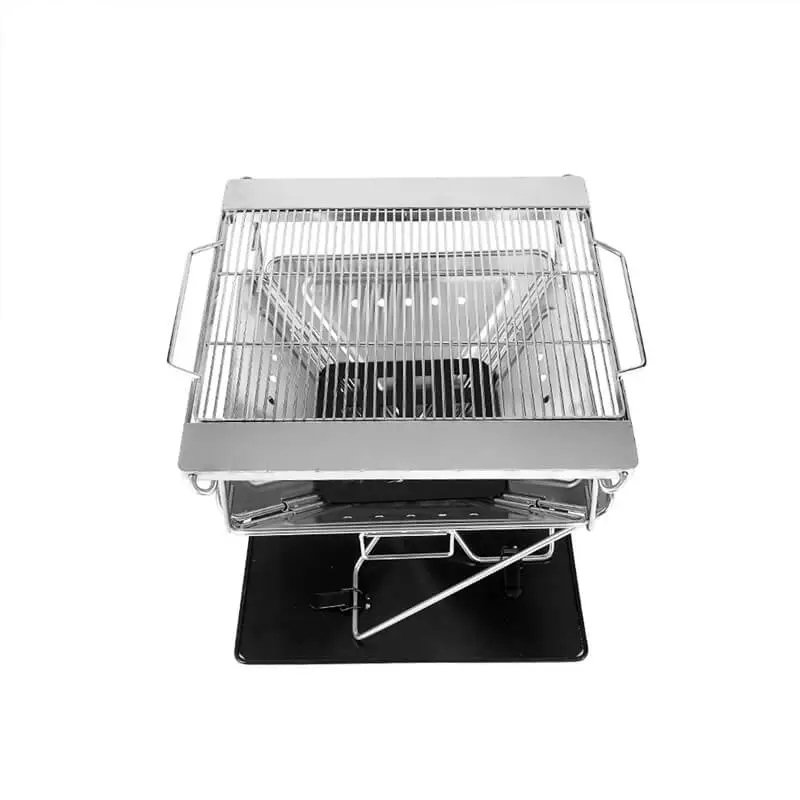

.jpg "Essential Tips for Bulk Purchasing Small Gas Grills: A Comprehensive Guide")